As of 2026, all versions of Amplenote offer the opportunity to keep a record of how your mood/energy level varies from day-to-day.
linkRationale
Since Amplenote's audience skews toward the business-minded, it's easy to imagine "skepticism" or "indifference" toward the notion that this little note app offers to track energy level.
But many of these same logic-driven people prioritize collecting data to make important decisions. If having better mood would unlock more productivity, why not take steps to optimize it?
And if you're optimizing, it takes data to steer.
Think about things you've previously measured. What was the effect of recording the measurements? If you're among the multitudes who have experienced "what gets measured gets improved" first-hand, the benefit of crafting your own "energy compass" should be self-evident.
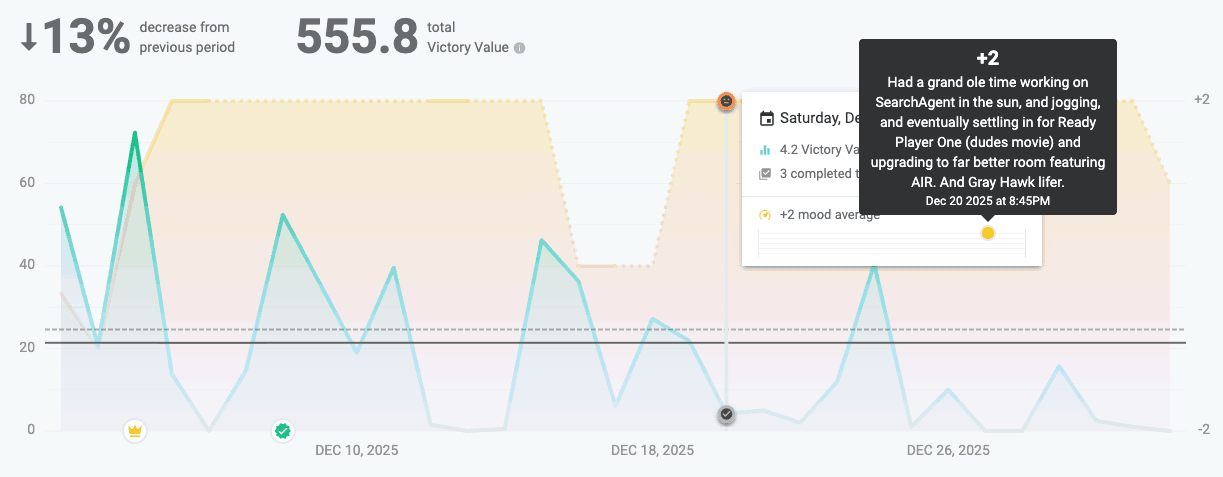
"Completed Task Stats" utilize ratings (orange line) to contextualize experience
The more data you collect, the better you can optimize toward days that leave you feeling like a grateful winner.
linkEnergy Delta per Habit (Dashboard)
The Mission Control Dashboard offers an "Energy Delta per Habit" module, built to calculate the correlation between "habits" and "positive days."
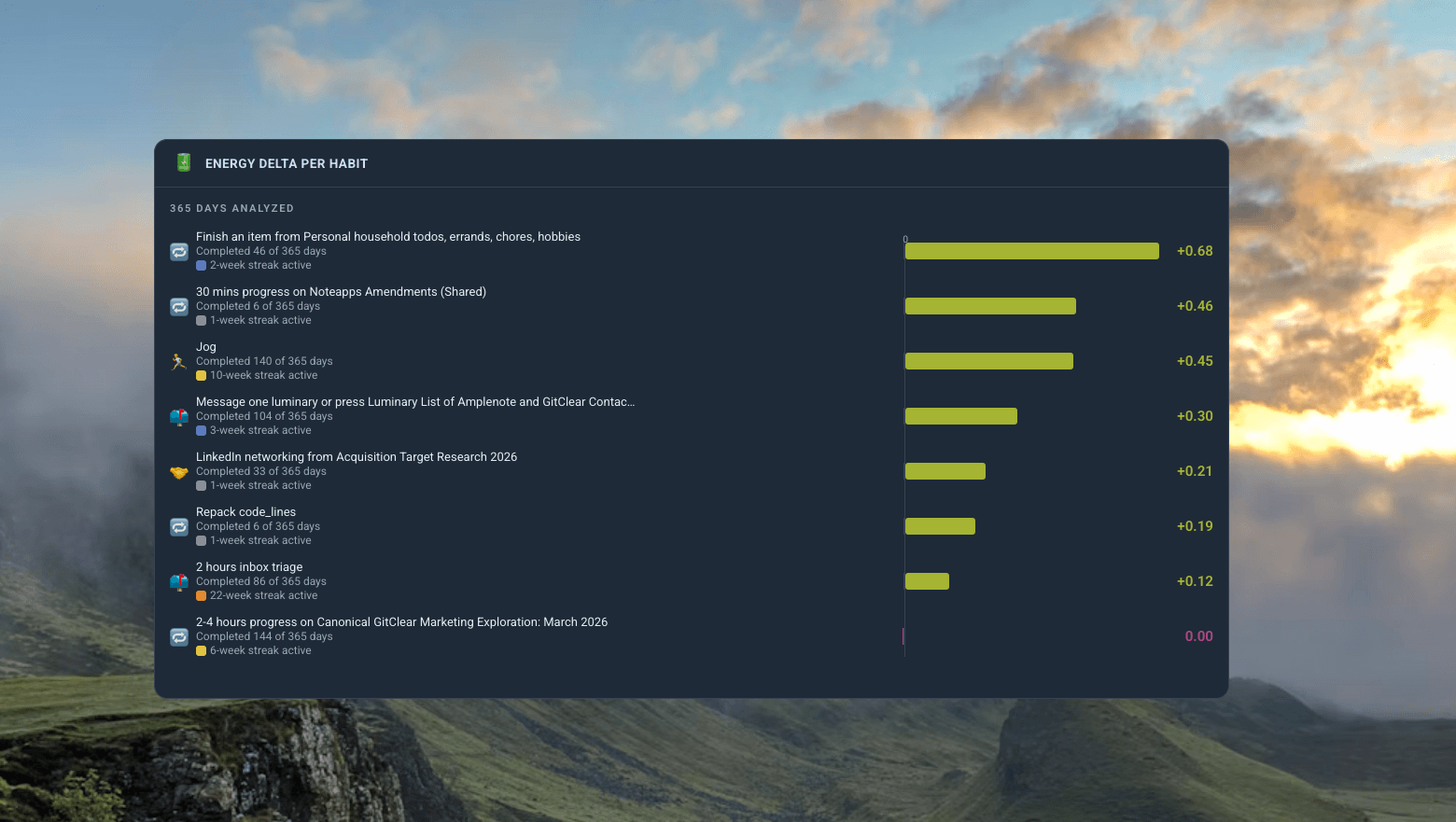
Clicking the battery icon in the header expands this module to show all habits without scrolling
This data becomes available as you submit energy ratings alongside recurring tasks. To set up a task to be flexible recurring ("repeat this task X days after I last finished it"), use /every in the task to set its recurrence interval, or read all details about setting up habits in Amplenote.
linkIs this popup measuring "mood" or "energy level"?
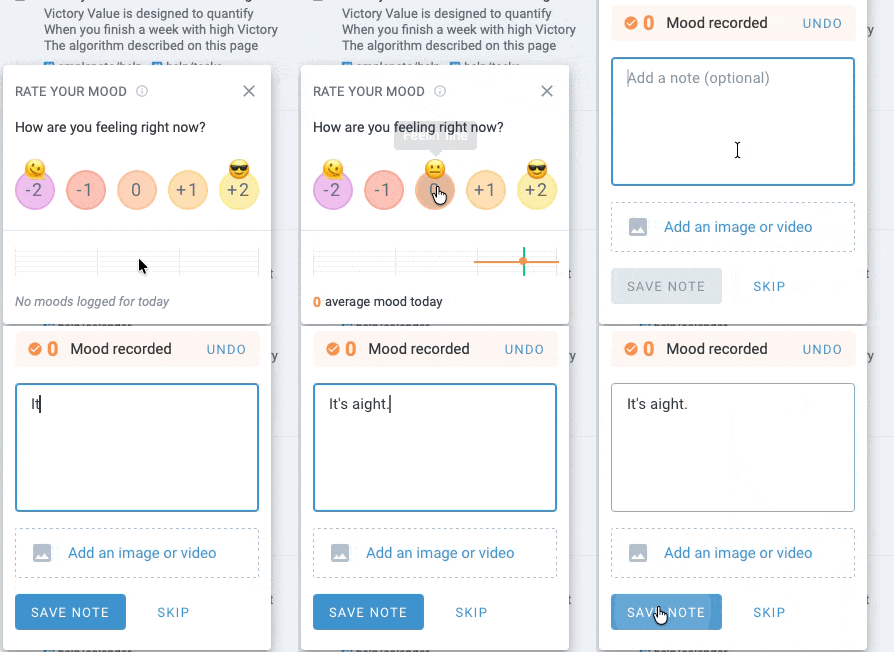
Capturing energy level/mood is never far in desktop or mobile
It is whichever is easiest for you to estimate.
In practice, these two are heavily correlated, so we don't care which concept you think you're measuring. Since "mood" is (much) shorter, that's the label we use.
If you can approximate your energy level faster than your "mood," then think of this popup as measuring your energy level.
linkHow will it benefit me?
It might not. If you only remember to use it once or twice a month, the data you generate won't relate much usable detail.
But if you make a habit of trying to record this every morning and/or evening, you'll likely glean the sort of benefits that were described in the Jim Collins on Tim Ferriss, and later, Cal Newport podcast: You'll have the chance to find patterns emerge among the days that end in a contented exhale.
More specifically, it will benefit you by offering you a chance to capture day-to-day records of what will rapidly fade from memory. When armed with randomly sampled data that captures when your energy spikes or wanes, you'll have a potent base from which to go spelunking for unifying threads.
Maybe you'll find patterns like this one, from real world data:
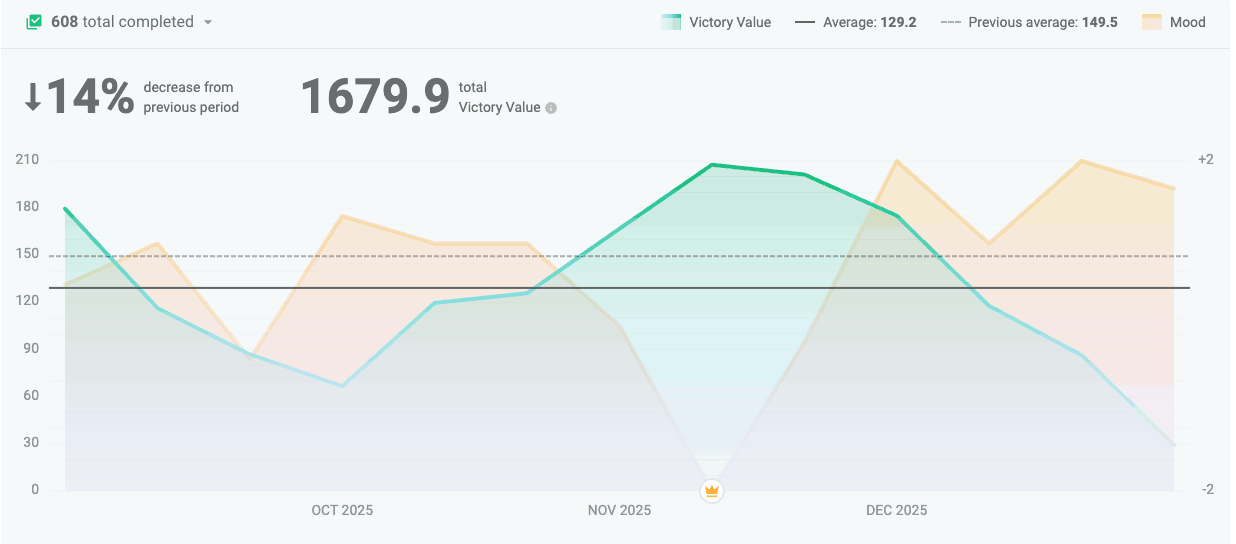
Highest Victory Value (productivity)? Purely opposite to high mood
If your productivity subtracts from your enjoyment, it suggests the potential to benefit from brainstorming how to better align the two sides of a content & satisfied life.
Beyond using Amplenote's graphs to eyeball the relation between mood & productivity, it can also be interesting to retrieve your mood data to feed to an LLM in search of patterns that can lead to constructive changes.
linkHow is my data secured? How can I download it?
Your energy level ratings are stored as an adjunct metadata, akin to how notes are stored in Amplenote. Learn the transparent details of Amplenote's note security here. As with note content, text added to mood ratings is encrypted on the client, transmitted encrypted, and stored encrypted.
When exporting your notes, all mood rating data is included in the resulting export as data/mood-ratings.json, formatted as: